
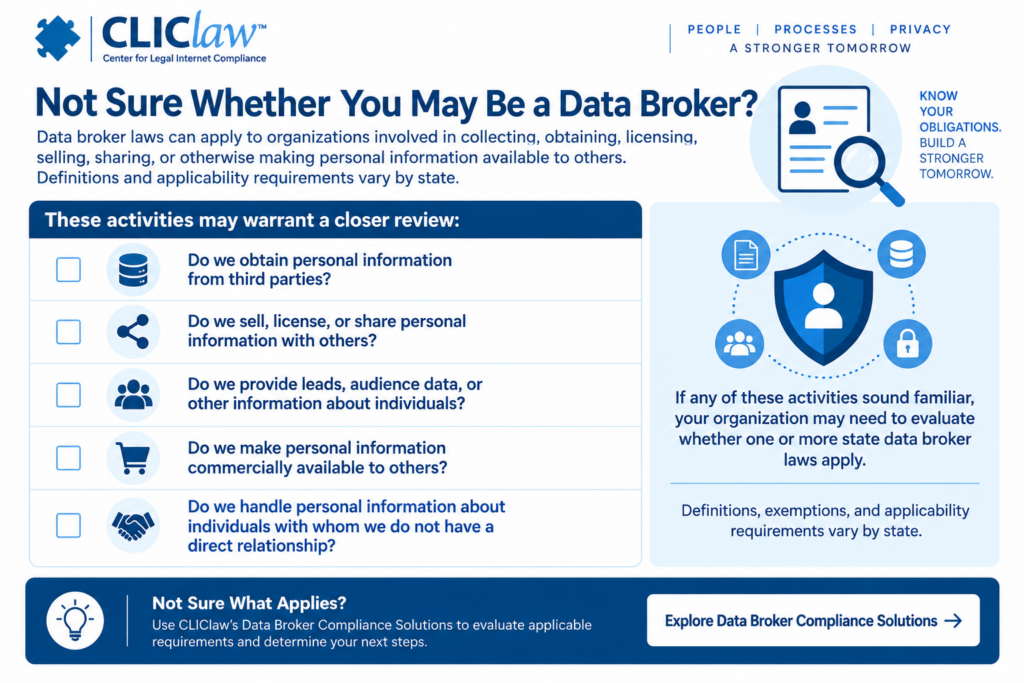
 Your Business May Have Data Broker Obligations Without Realizing It.
Data broker laws can apply to organizations that collect, obtain, license, sell, share, aggregate, or otherwise make personal information available to others, depending on the organization’s activities and the requirements of the applicable state law.
Determining whether these laws apply is not always straightforward. States define data brokers differently, and applicability may depend on how information is obtained, the organization’s relationship with the individuals involved, how information is used or disclosed, and whether an exemption applies.
Could Your Organization Need a Closer Review?
Organizations involved in third-party data, data licensing, audience or marketing data, data enrichment, lead generation, or other commercial uses of personal information may need to evaluate whether one or more state data broker laws apply.
Even organizations that do not consider themselves “data brokers” may need to examine their practices more closely.
Don’t Stop at “Maybe.”
Knowing that a data broker law might apply is only the beginning. The next step is determining which laws apply, what they require, and what your organization needs to do about them.
CLIClaw subscribers have access to practical Data Broker Compliance Solutions designed to help organizations move from identifying potential obligations to building and implementing appropriate compliance processes.
Explore Data Broker Compliance Solutions →
Compliance Note: CLIClaw provides educational and compliance support materials and does not provide legal advice. Laws and regulations change, and requirements may vary based on an organization’s specific circumstances. Organizations should verify current requirements and consult qualified legal counsel when evaluating specific legal obligations.