
A Practical Path From Applicability to Ongoing Compliance.
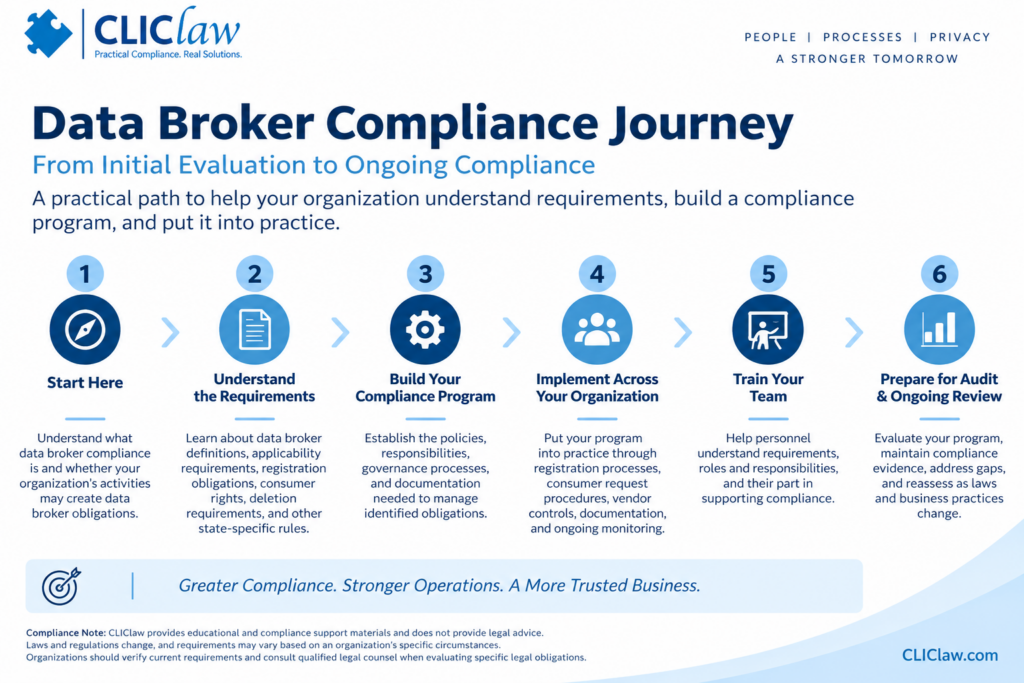 Data broker requirements vary significantly by state and can create different obligations depending on an organization’s activities, data practices, and relationships with consumers.
The Data Broker Compliance Journey helps organizations identify where they are in the compliance process and where additional evaluation, implementation, or documentation may be needed.
Use the steps below to identify where your organization is in the compliance process and where to go next.
1. Start Here. Determine whether your organization’s activities may create data broker compliance concerns and whether further evaluation may be appropriate.
Start With Data Broker Compliance →
2. Understand the Requirements. Learn how state data broker laws differ and the types of requirements organizations may need to evaluate.
Understand Data Broker Requirements →
3. Evaluate State-Specific Requirements. Determine which state data broker laws may apply to your organization and identify the requirements that warrant further review.
Explore State Data Broker Requirements →
4. Implement Applicable Requirements. Use CLIClaw‘s state-specific compliance materials to help translate identified requirements into practical processes, controls, and documentation.
Explore State-Specific Compliance Solutions →
5. Train Your Team. Help personnel understand their responsibilities and how established data broker compliance procedures affect their roles.
Explore Data Broker Compliance Training →
6. Prepare for Audit & Ongoing Review. Evaluate your compliance processes, identify potential gaps, and prepare the documentation and evidence needed to support ongoing compliance.
Explore Data Broker Audit Readiness →
7. Research & Reference. Access state laws and other reference materials when researching data broker compliance requirements.
Explore Data Broker Resources →
Compliance Note: CLIClaw provides educational and compliance support materials and does not provide legal advice. Laws and regulations change, and requirements may vary based on an organization’s specific circumstances. Organizations should verify current requirements and consult qualified legal counsel when evaluating specific legal obligations.