
 May 11, 2026
By: Linda Goodman
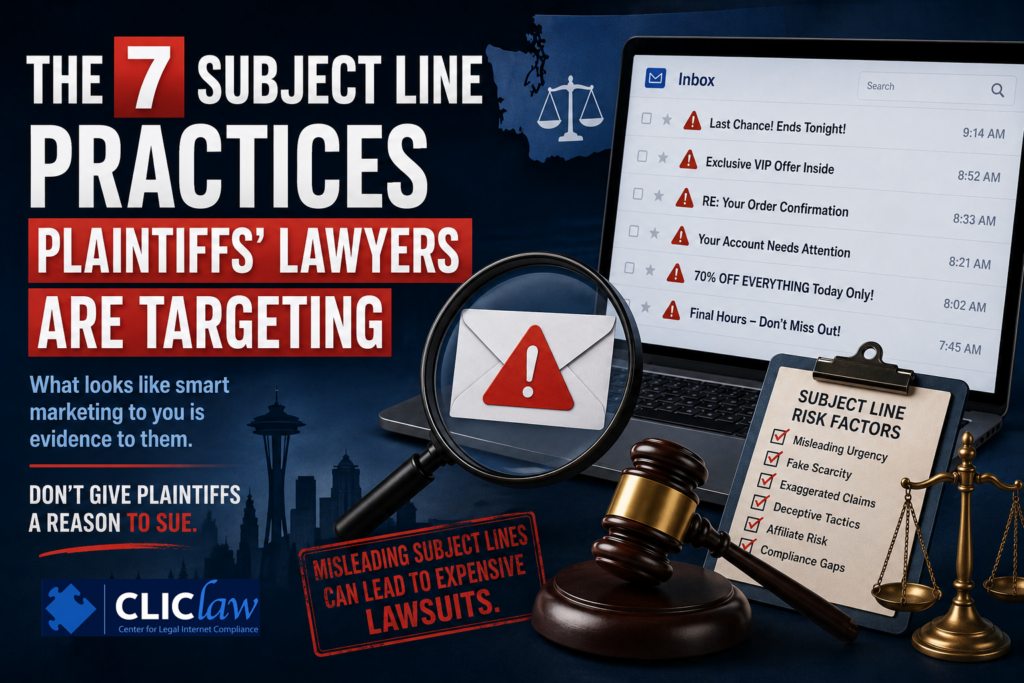
For years, marketers treated subject lines as creative territory. Push urgency, increase open rates, drive curiosity, test emotional triggers and maximize conversions. Today, plaintiffs’ lawyers are treating those subject lines differently. They are treating them as evidence. Washington’s Commercial Electronic Mail Act (“CEMA”), makes that distinction extremely important.
Following the recent wave of CEMA litigation, plaintiffs are no longer focusing only on obvious spam or fraudulent email campaigns. They are increasingly targeting ordinary retail, ecommerce, lead generation, and affiliate marketing emails – particularly where subject lines allegedly overstate urgency, mischaracterize offers, or create misleading impressions. Many businesses still assume CAN-SPAM compliance is enough. It is not.
CEMA class actions are now focusing on the actual language marketers use every day. Here are seven subject-line practices that are increasingly attracting legal scrutiny.
1. “Last Chance” Emails That Are Not Actually the Last Chance.
This is becoming one of the most common allegations in CEMA lawsuits. A marketer sends:
-
“Final Hours”
-
“Last Chance”
-
“Ends Tonight”
-
“Offer Expires at Midnight”
Then the same or substantially similar promotion appears the next day. Plaintiffs argue the urgency claim was false or misleading at the moment the email was sent. Marketing teams often view rolling promotions as normal ecommerce behavior. Litigators view them as discoverable evidence. The issue is not whether the consumer was harmed financially. The issue is whether the subject line accurately described the promotion. That distinction matters.
2. Fake Scarcity and Inventory Pressure.
Subject lines increasingly use scarcity triggers such as:
-
“Only 3 Left”
-
“Selling Out Fast”
-
“Limited Inventory”
-
“Almost Gone”
If those statements are not tied to real inventory conditions, they can become a dangerous risk. Many marketers use these phrases dynamically or habitually without validating actual stock levels. That creates litigation exposure when plaintiffs argue the scarcity was manufactured rather than real. Businesses should assume plaintiffs may request inventory records, campaign logic, automation settings, and internal discussions about scarcity messaging.
3. “Exclusive” Offers That Are Not Actually Exclusive.
The word “exclusive” is also receiving increased scrutiny. Examples include “Exclusive Savings,” “VIP Offer”, “Private Discount”, and “Members-Only Access” If the same promotion was widely available, plaintiffs may argue the subject line materially overstated the nature of the offer. This becomes particularly problematic where affiliates use identical promotions, coupon codes are publicly distributed, or “private” offers are simultaneously advertised elsewhere. Marketers often think in terms of engagement language. Plaintiffs think in terms of factual representations.
4. “RE:” and Conversation Simulation Tactics.
Although more aggressive deception cases have existed for years, plaintiffs continue targeting emails designed to simulate personal or ongoing conversations. Examples include “RE: Your Order”, “Following Up”, “Checking Back”, “Still Interested?” and “Quick Question”. In nearly all cases, there was no prior relationship or conversation existed.
Courts and regulators increasingly examine whether the subject line falsely implied an existing transaction, a customer service interaction, or a personal communication. This is particularly risky for affiliate marketers and lead generators attempting to increase open rates through familiarity-based tactics.
5. Security or Account-Themed Subject Lines.
Plaintiffs also continue targeting subject lines implying account alerts, password issues, failed transactions, unusual activity, or security notifications. Examples may include “Your Account Needs Attention”, “Payment Problem Detected”, “Action Required”, “Your Subscription Is About to Be Cancelled”
These subject lines create elevated risk because they may trigger consumer anxiety or imply a transactional relationship that does not actually exist. Regulators often view these tactics as especially problematic because they exploit trust and urgency simultaneously.
6. Overstated Discount Claims.
Another emerging focus area involves discount framing. Examples include:“70% OFF EVERYTHING”, “Biggest Sale of the Year”, “Lowest Prices Ever”, “Today Only Pricing”, without sufficient substantiation. If exclusions apply, inventory is limited, prices were recently inflated, or the same discounts appear routinely, plaintiffs may argue the subject line created a misleading impression.
This risk increases dramatically when campaigns are automated, affiliates modify subject lines independently, or multiple vendors distribute inconsistent offers. Please be assured, plaintiffs and regulators alike will look at your inventory and sales records.
7. Affiliate-Created Subject Lines the Brand Never Properly Reviewed.
This may be the single most underestimated risk in the current CEMA environment. Many advertisers assume the affiliate wrote the email, the network distributed the campaign, or the publisher controlled the creative. Plaintiffs do not care who wrote or distributed the email. If the email promoted the advertiser’s products or services, the advertiser may still become the primary litigation target.
That means brands increasingly face exposure from unapproved subject lines, modified creative, recycled templates, deceptive urgency tactics, or noncompliant affiliate email practices. And during litigation, plaintiffs often ask a devastating question:
“What systems did the advertiser use to monitor and approve affiliate email campaigns?”
Most Brands do not have a good answer.
Why This Litigation Trend Matters.
The larger issue here is not simply Washington law. It is the broader direction of email marketing litigation. Plaintiffs are increasingly moving away from traditional spam allegations and toward:
-
Consumer deception theories,
-
State consumer protection laws, and
-
Statutory-damages frameworks targeting marketing practices themselves.
Subject lines are becoming a focal point because they are easy to isolate, easy to compare, easy to screenshot, and easy to present to juries. What marketing teams view as creative optimization, plaintiffs increasingly frame as misleading commercial representations.
✔ CLIClaw Compliance Takeaway.
Companies should stop treating subject-line compliance as a purely creative function.
At minimum, businesses should:
-
Implement subject-line review standards,
-
Document promotional substantiation,
-
Align urgency claims with actual campaign timing,
-
Audit affiliate email practices,
-
Preserve approval workflows, and
-
Train marketing teams on CEMA risk.
Because in today’s litigation environment, the most dangerous part of your email may no longer be the body copy. It may be the six words consumers see first.
Visit our CLIClaw Email Marketing Compliance Program for compliance training, risk assessments, and practical legal guidance designed specifically for the digital marketing industry.
© 2026 CLIClaw.com
This article is for information purposes only. It is not intended to be and should not be relied on as legal advice for any particular matter.